YouTube Pre-Roll Hook Frameworks That Beat the Skip Button
Capture attention in two seconds, not five, by disrupting how brains categorize ads.
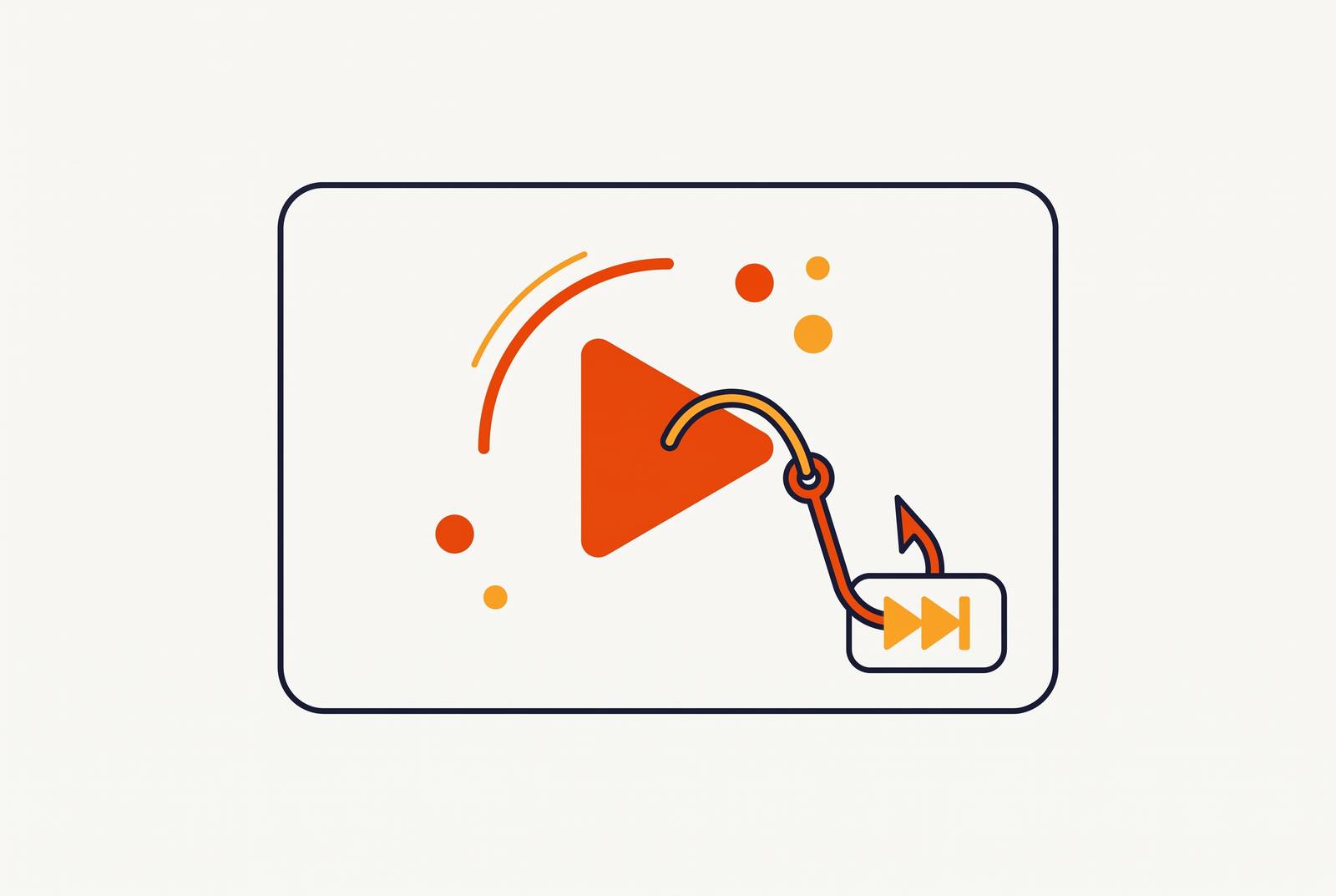
You decide whether to skip a YouTube pre-roll ad long before the skip button even shows up. Viewers categorize an ad as "an ad" within two to three seconds, not five. The five-second countdown is a billing rule, not a behavioral window, and brands that optimize for it are already too late.
Why the skip decision happens before the skip button appears
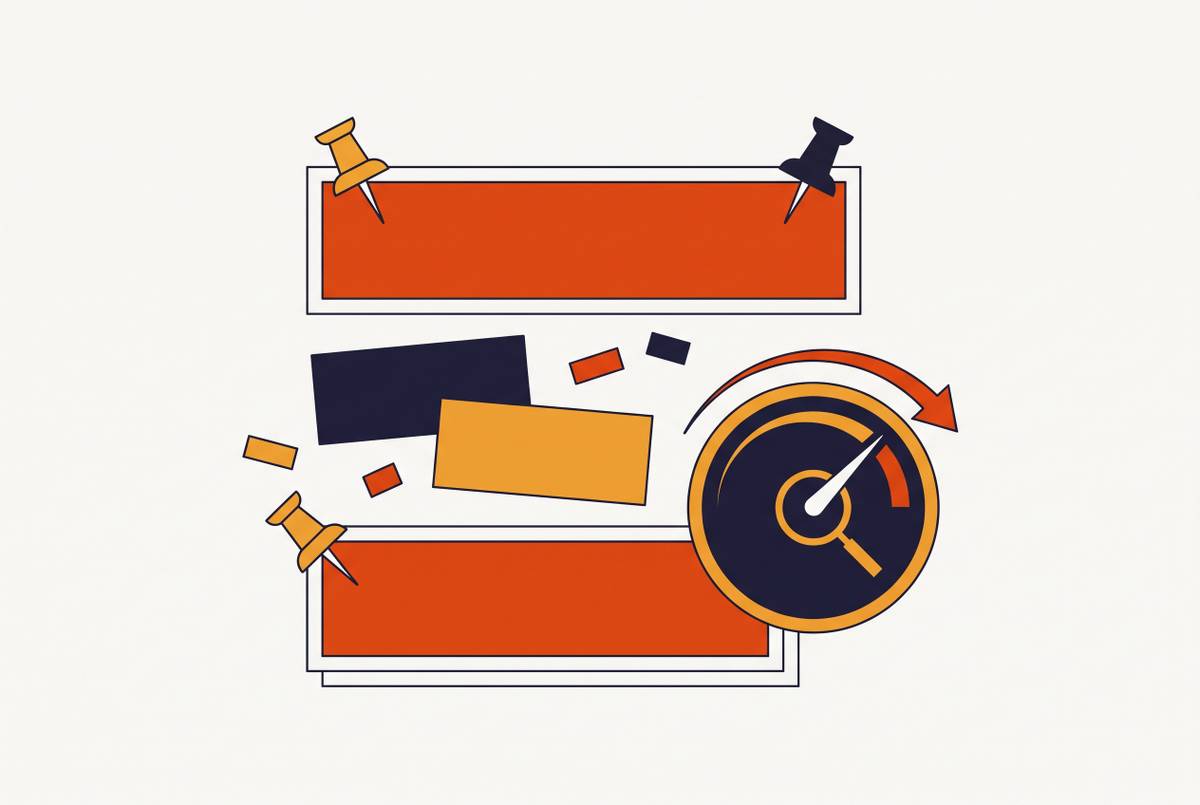
The skip decision fires in roughly two to three seconds, not the commonly cited five. Viewers who have seen hundreds of pre-roll ads develop pattern recognition that classifies "this is an ad" almost instantly. The five-second countdown is a platform billing rule, not a behavioral truth. Brands that optimize for a five-second deadline are already behind by the time their hook gets to the point it was designed to reach. The real target is the two-to-three-second categorization window, the moment when the brain matches the stimulus against a stored template and the thumb begins to move. Everything after that is recovery work, and recovery work in pre-roll is expensive.
What the brain is actually doing in those first two seconds
The viewer's brain is not evaluating the ad's message in the first two seconds. It is pattern-matching the stimulus against a stored category called "ad." The moment that match fires, the thumb moves. Pre-roll research shows viewers decide to skip within two to three seconds, not the full five.
Pattern recognition, not attention span, is the variable. A polished thirty-second ad can trigger the skip at second one because its visual grammar matches the stored ad template exactly. A slow zoom, a brand logo, a voiceover saying "meet the future of" are all signals that say "this is an ad" before any message has been delivered.
Format mismatch accelerates the skip. An ad that looks like a TV commercial dropped into YouTube signals "this was not made for me" almost instantly. Viewers are pattern-matching against native YouTube content, creator intros, vlogs, tutorials, and anything outside that grammar is flagged as an interruption worth escaping. The winning move is to prevent the "ad" categorization from completing, and that requires disrupting the visual and audio patterns the brain uses to make that call.
The second-by-second architecture that prevents the "ad" categorization from firing
Hook success is an architecture problem, not a length problem. What fires the pattern-match is the sequence of visual, verbal, and emotional cues in each half-second slot. Stretch a weak hook to five seconds and it still loses at second two.
The architecture works in three moves. Seconds zero to one are for pattern disruption: a visual or audio element that does not immediately register as advertising. This prevents the categorization from completing before it starts. Seconds one to three are for the cognitive hook: a question, a problem statement, or an open loop the brain craves to resolve. The viewer now has a reason to defer the skip decision while waiting for resolution. Seconds three to five are for the relevance signal: making clear the content addresses something the viewer actually cares about, without overt sales language that re-triggers the ad categorization.
Pre-roll hook research describes a full hook-brand-story-CTA framework. Seconds one to two deliver the visual or verbal hook that creates curiosity or emotional engagement. Seconds three to five integrate the brand naturally. Seconds six to twenty-five deliver the main message. The final five seconds present a clear call to action.
There is also a "second save" checkpoint. A secondary hook around the two-and-a-half to three-second mark catches viewers who almost skipped but hesitated. Most briefs omit this entirely, and missing it forfeits retained impressions that have already been paid for. Duration is a constraint, not a strategy. A strong hook compressed into three seconds can carry a viewer through an entire unskippable pod. A weak hook at five seconds still loses.
Four creative patterns that consistently survive the skip window
Four distinct creative moves reliably prevent the ad categorization from completing, and each one works through a different neurological channel. First, open on the payoff, not the setup. Show the result, the reaction, or the conflict in frame one, and explain it in frame three. This reverses the TV-commercial grammar the brain uses to categorize pre-roll as skippable. Second, use on-screen text as a parallel channel. A meaningful portion of YouTube viewing happens with sound off or low, and a hook that depends entirely on audio loses every viewer who never hears the line that would have stopped them.
Third, name the audience or the problem in the first three seconds. A direct callout such as "If you run a Shopify store and hate your CAC" does more targeting work in three seconds than any brand tagline. It makes the relevance signal immediate and personal. Fourth, know what definitively does not work: logo bumpers, slow establishing shots, music-led intros without dialogue, and generic montages of happy customers. Each of these matches the stored TV ad template and accelerates the skip decision.
Why brand integration must come after the hook earns attention, not before it
Showing the brand inside the first five seconds can increase recall, but only when the hook has already earned attention. Brand-first framing before delivering any value re-triggers the ad categorization and accelerates skipping. The practical rule is that brand integration belongs in seconds three to five, after the pattern interrupt and cognitive hook have done their work, not in seconds zero to two where it will be read as a logo bumper.
The objection from legal and brand safety teams, that the logo needs to be visible early, has a structural answer. Compliance reviews the full asset. The first five seconds should be judged purely on retention data, not brand guideline adherence. Nobody skips less because they saw a logo sooner. Brand colors, fonts, and voice guidelines applied perfectly in the first frame do not stop the skip. A useful creative test is to take any existing thirty-second pre-roll and delete the first five seconds. If the ad still makes complete sense, the opening was dead weight, and the brand reveal can be moved earlier into what is now the actual hook.
How format differences change what "hook" means in practice
The neurological window is the same across formats, but the physical escape mechanism and the viewer's posture change enough that a hook built for one format will almost always underperform in another. Skippable in-stream is the canonical format. The skip button appears after a variable window, commonly five seconds but now subject to dynamic testing, and the hook must prevent a deliberate thumb press. Bumper ads, at six seconds and non-skippable, are different: the entire ad is the hook. There is no separate act two, and every second-by-second principle from the framework applies to the full duration.
Shorts require something else entirely. The hook has to prevent a swipe rather than a skip, so you need visual novelty and immediate value within the first two seconds, cuts every few seconds, and clear text overlays for key points. A thumbnail-style opening that compels a reader on a feed will not survive the first swipe in a vertical-feed placement, and a slow-build in-stream hook will lose the feed audience before the message lands.
Building and testing hooks as standalone assets, not ad openings
Teams that treat the hook as the opening of an ad storyboard it last. Teams that consistently beat the skip button treat the hook as a separate creative asset that gets tested and iterated before the rest of the ad is built. The backwards-build method means storyboarding the hook as its own standalone asset, separate from the narrative arc of the full ad, and treating it like a headline in a paid search A/B test. Functionally, that is what it is.
The workflow is to write five different five-second openers and test them against each other before storyboarding the rest of the ad. The hook that retains viewers past the skip window determines which version of the full ad gets produced. Hook-level testing produces the largest single lift in overall campaign efficiency, larger than targeting refinement and larger than bidding strategy changes, because it is the highest-leverage creative investment with the lowest production cost.
When you select creators, look at retention curves from their organic content, not just view counts or engagement rates. A creator whose organic content shows a steep early drop-off is a liability in a skip-sensitive format regardless of follower size. AI-generated hook variants accelerate this testing workflow: platforms that produce multiple copy and creative variants from a single brief make it practical to test five openers simultaneously rather than sequentially. What once required a production cycle now requires a prompt and a review step.
What a confirmed hook-optimized campaign looks like in outcome terms
Hook optimization is not a marginal gain. Documented campaigns show skip rates dropping from the industry average range to a fraction of that baseline when the two-to-three-second architecture is applied deliberately. In one performance marketing case study, average pre-roll skip rate dropped by more than half over six months of hook-first creative strategy. The practitioners involved described it as a fundamental change in campaign economics. The asymmetry matters: pre-roll skip rates for skippable formats average in the 80 to 90 percent range as a baseline. Fixing the hook does not produce incremental improvement. It produces an order-of-magnitude change in retained impressions.
Why hook performance data is harder to read accurately than it looks
A well-structured hook test can still lead you to misleading conclusions if you rely on native platform conversion data. YouTube's reported conversion data overstates impact by 30 to 60 percent in most accounts because of view-through attribution and own-channel double-counting. The honest measurement is a geo holdout test or a properly designed conversion lift study.
For hook testing specifically, skip rate and view-through rate are the reliable signals at the evaluation stage. Conversion attribution requires a separate measurement layer that is not native-dashboard dependent. Variable skip windows compound this. If dynamic skip timing shortens the window for a given creative, a drop in view-through rate may reflect format change rather than hook failure. Teams need to distinguish the two before killing a creative.
Running hook-first pre-roll without a specialist stack
Most teams know the frameworks but lack the infrastructure to execute them consistently. The typical fragmented stack makes hook-first creative slow and expensive: creative is produced in one tool, published through another, and analyzed in a third. By the time skip rate data comes back, the creative cycle has already moved on.
AI-powered platforms that combine brief generation, creative variant production, multi-channel deployment, and performance monitoring in a single interface collapse the iteration cycle. A team can generate five hook variants, push them to YouTube, and have skip rate data feeding back into the next creative decision without leaving the platform. The managed service option matters for teams that want hook-first strategy without building the internal capability. The same platform that runs AI-generated briefs and creative variants can hand execution to expert marketers, so the framework in this piece is available whether you run campaigns yourself or delegate entirely.
The north-star question stays constant regardless of the operational model. Is the hook preventing the ad categorization from firing in the first two seconds, and is the data infrastructure reliable enough to know when it is and when it is not? Answer that consistently, and the skip button stops being the thing that kills your campaign.